Ethology: The Science of Animal Behavior

The article is written by Pavlo Chaika, the chief editor of the "Piznavayka" magazine. Since its founding in 2013, Pavlo Chaika has been dedicated to popularizing science in the world. The main goal, both of the magazine and of this article, is to explain complex scientific topics in a simple and accessible language.

From the moment humans appeared on Earth, we had to constantly and carefully observe the behavior of the animals around us, and know their habits well. In fables and myths, the images of animal-people and animal-gods fantastically intertwined with a basic understanding of the actual behavior of certain animals, alongside specific human qualities. In this case, it is especially important to note that not only the “animal-like” creations of human imagination but also real, existing animals were endowed with human qualities. Their behavior was viewed through the lens of human motives and actions. This “humanizing” of animals, or anthropomorphism, as we call it today, played a significant role in the philosophical concepts of ancient thinkers who believed in the possibility of the soul migrating back and forth between humans and animals.
These views later caused great harm to the scientific study of animal mental activity. We cannot delve into the details of the large and complex problem of animal intelligence here, but we will show with specific examples how animal behavior can and should be explained without any “humanization.”
Why is the Wolf “Dumb”? Animal Behavior in Unfamiliar Situations
In fables and fairy tales, the wolf is always known not only for its gluttony but also for its stupidity (compared, for example, to the fox). Based on some facts, it might seem that this is true.
The 19th-century hunter and naturalist A.A. Cherkasov described a method of hunting wolves that was common in his time. Two circles of stakes were set up in a clearing favored by predators, allowing a wolf to walk freely between them but not to turn around. An opening was left in the outer circle with a door hung diagonally, which would open inward on its own, locking the passage between the two circles of stakes.
If some carrion or a live piglet was placed in the center of the inner circle, the wolf, sensing the smell or hearing the piglet’s squeal and seeing the delicious morsel through the stakes, would enter the circular corridor through the open door. Searching for a way out between the stakes of the inner circle, it would go around and, as Cherkasov writes, “…come to the door that locked the space between the rows of stakes. The wolf would try to turn back—it couldn’t; then it would involuntarily push the door, which would immediately block the exit, so the wolf would pass it and once again enter the corridor from the side it came from. In the meantime, the door would open inward by itself, and the poor wolf, without reaching the prey, hungry, would keep walking in the circular corridor until the owner came and skinned it.”
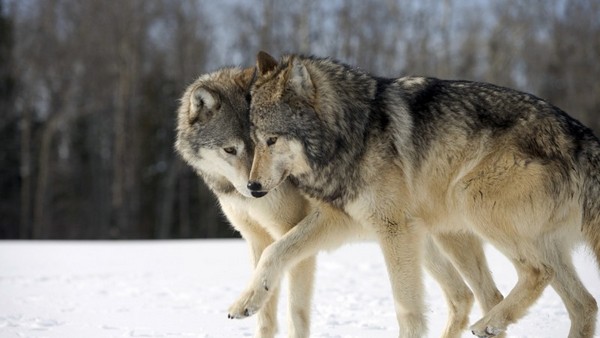
It would seem so simple: if the wolf had only backed up, it would be free! Yet, this example does not prove the wolf’s “stupidity.” Its behavior is explained by the fact that it entered a situation completely different from its normal habitat, a situation for which its behavior was not prepared during the species’ development. Moving forward (with corresponding turns left and right) in the wild was always sufficient for the wolf to get out of any difficulty. In this specific case, the “endless” palisade on the left and right, the open passage ahead, and the inability to turn around could only trigger one reaction in the animal—to move forward.
This fact, however, should not create the impression that animals behave like machines and have no mental life of their own. On the contrary, today we know that some higher representatives of the animal kingdom possess elementary thinking. However, it is of a qualitatively different order than human consciousness. There is, by the way, plenty of evidence of the wolf’s “cleverness” when it is in its normal natural environment.
Ethology: Core Branches and Research Methods
Animal behavior is studied from various angles. The physiological processes within the organism that form the basis of behavior are studied by the science of higher nervous activity and neurophysiology, founded by I.P. Pavlov. Zoopsychology studies animal behavior from the perspective of the development of mental reflection and the origin of human consciousness. Zoologists have also become involved in studying animal behavior. One branch of zoology, ethology, or as it is also called, behavioral biology, studies the general biological aspects of animal behavior, viewing behavior as an ecological factor and a factor in evolution. Simultaneously, ethologists study the origin and development of the behavioral acts themselves in the process of evolution.
Species-Specific Behavior and Ritualized Movements
An ethologist’s primary goal is to accurately determine how an animal behaves in nature and to identify the adaptive role of behavior—the specific significance of certain behavioral acts for the survival and progressive development of a species.
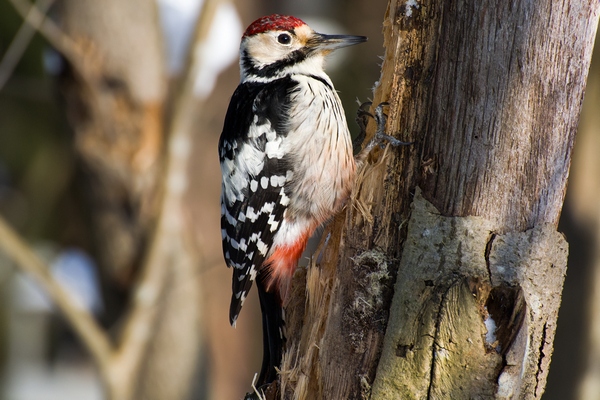
To solve these very complex problems, it is first necessary to have a solid understanding of the forms of behavior that are performed in a more or less uniform way by all animals of the same species. Here are a few examples of this type of species-specific behavior. When a woodpecker meets another woodpecker in its territory, the owner tries to chase the uninvited guest away. The guest may resist. At first, the encounter is limited to a peculiar duel: each bird tries to intimidate the other with unique movements that are specific to each species but always performed in the same stereotypical way. Ethologists call these “ritualized” movements. For example, grey-headed woodpeckers, sitting vertically on a tree trunk facing each other, threaten in the following manner: the neck is stretched out, and the head, and sometimes the front part of the body, rhythmically sways from side to side.
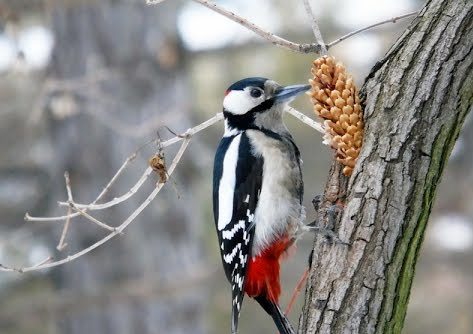
Under stronger excitement, the bird beats its wings. The green woodpecker’s pendulum-like movements have a more complex pattern: each sideways swing is supplemented by a rapid rotating movement of the head, after which the beak is thrust forward. And finally, the black woodpecker moves its head in a closed, elliptical curve, makes 4-6 sharp “lunges” with its beak into the air, and twitches its wings. At the same time, males show each other the characteristic red spot on their heads. If these “psychological attacks” do not lead to the flight of one of the opponents, a serious fight may begin.
Ritualized movements associated with reproduction are even more diverse and complex. Various forms of male “courting” of females in birds are widely known. Intricate and strictly species-specific “mating dances” are performed by fish, mammals, reptiles, insects, and cephalopods. These forms of mating behavior are absolutely necessary for pair formation, and the strictly species-specific “pattern” of animal behavior ensures that a partner of the same species is found, excluding the possibility of mating between different species.
Species-specific forms of behavior cover all spheres of animal life. Even such seemingly simple actions as scratching or sleeping are performed differently by each species.
The adaptive role of behavior is revealed precisely in these specific, at first glance insignificant, details of an animal’s motor activity. Comparative study of the similarities and differences in the details of species-specific behavior greatly helps scientists to reconstruct the relationships between various species and to understand the paths of evolutionary development of a particular animal group.
It is also important to remember that various postures and body movements play a major role in animal communication, and they are composed of species-specific motor elements like those described. Many animal movements have informational value. This was quite clear in the example with the woodpeckers. We will return to this issue below.
The study of the structure of animal behavior and the creation of species-specific characteristics, known as ethograms—which cover all behavioral acts specific to a given animal species—is the focus of one branch of ethology called descriptive ethology, or behavioral morphology.
Another branch of ethology, experimental ethology, aims to study the dynamics of behavior and to identify the interaction of external and internal factors. For this purpose, ethologists conduct experiments both in nature and in the laboratory.
The Power of “Key Stimuli”
Several series of field experiments were devoted to studying the gull’s relationship with its eggs. Eggs were transferred from one nest to another, replaced with eggs from other species, artificial eggs, and then various foreign objects of different sizes, shapes, and colors. It turned out that gulls would sit on both foreign and wooden, glass, stone, and clay eggs of various sizes and colors, and roll them into their nests. The same thing happened when colorful balls, rounded pebbles, or potatoes were placed in the nest instead of eggs.
Researchers concluded that a gull’s positive reaction to an egg is determined by only a few elementary features: roundness, and the absence of bumps, hollows, or nicks.
These experiments serve as a good illustration of one of the most important principles of ethology—the concept of “key stimuli” (or “sign stimuli”). This concept was developed by the founders of modern ethology—the Austrian zoologist Konrad Lorenz and the Dutch biologist Nikolaas Tinbergen. Its essence lies in the fact that species-specific actions (in our case, rolling an egg into the nest) are always triggered by a limited set of elementary, structurally simple, but nevertheless “abstract” features: simply “round and smooth” or, in other cases, “red and elongated,” and so on.
Interestingly, under experimental conditions, an animal’s reaction to key stimuli can even lead to biologically absurd situations. The more pronounced the specific qualities of the key stimuli, the more intense the animal’s reaction will be. For example, if you offer a gull two eggs of different sizes, it will roll the larger one into its nest. This can lead to the ridiculous situation where the bird abandons its own egg to try to incubate a giant wooden egg model that possesses supernormal stimulus features.
The effect of key stimuli is no less clear in other areas of animal behavior. The attack of a green woodpecker is not caused by the rival’s appearance “as a whole,” but only by the configuration and patterns of its head: if a scarecrow is placed in front of a tree hole, the owner will furiously attack it. But if the scarecrow is decapitated, the woodpecker will ignore it completely. Conversely, if you only show it the head, the aggression will reappear with the same intensity. A simple tuft of red feathers evokes a similar reaction in a robin.
The “Dummy Method” and Individual Choice
Does this mean that animals have no opportunity to show their own initiative or make an independent choice? Not at all! An animal’s activity in relation to the external environment is manifested, first and foremost, in its persistent search for the necessary triggering situations and in its selection of the most effective courses of action. This is where the animal’s mental abilities are revealed, and where individual experience and behavioral advantages come into play. The higher the mental development, the more significant the adjustments made by individual animals to rigid species-specific behavior.
Ethologists study key stimuli using the so-called dummy method (or model method). Its essence is that a studied reaction of an animal (for example, “begging” in herring gull chicks—opening their beaks toward the parent) is triggered by presenting a series of increasingly simplified models or dummies. The first model as accurately as possible reproduces the external appearance of the natural carrier of the key stimuli, for instance, the head of an adult herring gull with a yellow beak and a red spot on it. In subsequent models, unnecessary details are gradually eliminated through trials, and as a result, the dummy becomes less and less like the bird’s head. In the end, only the key stimuli remain.
In this example, the key stimulus would be a flat red object with a protruding shape. This object can elicit an even stronger reaction from the chicks than the original model. The reaction can be further enhanced if this dummy is replaced by a thin white stick marked with transverse dark red stripes, as this increases the contrast of the red markings.
Key stimuli, to which animals react with innate, genetically determined, species-specific actions, are always combined with other external and internal factors in natural conditions. It is extremely important for an ethologist to gain a clear understanding of this incredibly complex interaction of factors that controls an animal’s entire behavior.
The “Kaspar Hauser” Method and Imprinting
This is a difficult task. Only comprehensive research using the entire arsenal of modern scientific tools can help: the finest electrophysiological methods, isotopes, television and telemetry, cybernetics… At the same time, laboratory research must be combined with field studies. At first glance, it may seem paradoxical, but the biological mechanisms and regularities of natural, uncorrupted behavior in the wild can only be revealed in the laboratory by raising an animal in extreme artificial conditions. By analyzing the changes that have occurred in its behavior, the ethologist compares them with the animal’s natural behavior (this is where ethograms are essential!) and, as a result, gets the opportunity to identify the environmental factors that determine a particular behavioral act.
Ethologists have developed special methods for studying the ontogeny of behavior, the most important of which is the so-called “Kaspar Hauser” method. In 1828, a mysterious young man appeared in Nuremberg, about whom a rumor spread that he was the heir to the Bavarian throne, believed to have died in his early childhood. The young man’s name was Kaspar Hauser, and he had grown up in a peasant family, supposedly knowing nothing of his “high” origins.
This is why the method of research was named after him, where an animal is placed in conditions of complete isolation from its conspecifics or even from certain external environmental agents (optical, acoustic, etc.) shortly before, immediately after, or even before birth. The subsequent study of these “Kaspar Hauser” animals (most often experiments are conducted on birds) allows scientists to determine with astonishing accuracy what in their behavior is innate and what is hereditary, what develops primarily under the influence of external factors, and what is influenced by internal ones.
The English ethologist W. H. Thorpe, applying this method in combination with an analysis of tape recordings, brought clarity to the old debate about what and to what extent is innate in bird song. It turns out that there is no single rule; things are different for various species. For the development of vocal reactions in pigeons, individual experience has practically no significance: the sounds are entirely innate. In the chaffinch, however, a complete song is a combination of relatively simple innate, genetically fixed elements and sounds learned by the young bird from adults during its first year of life. The innate components serve to identify the general belonging to the same species, while the individually acquired ones are used for the recognition of specific individuals of that species.
A major achievement of ethology was also the discovery of imprinting—one of the most important factors in the development of animal behavior. This discovery is usually associated with Konrad Lorenz’s name. However, as early as the 1870s, the phenomenon of imprinting was described by D. Spalding. The researcher’s early death was the reason that his original experiments were not continued and were soon forgotten for many years.
One of Spalding’s experiments was as follows: a part of the eggs was removed from a brooding hen just before the chicks hatched. It turned out that the chicks, isolated from the moment they were born, when released to their siblings and mother hen, would run away from them and follow the human who had taken care of them. This happened even when the hen was calling the chicks to feed.
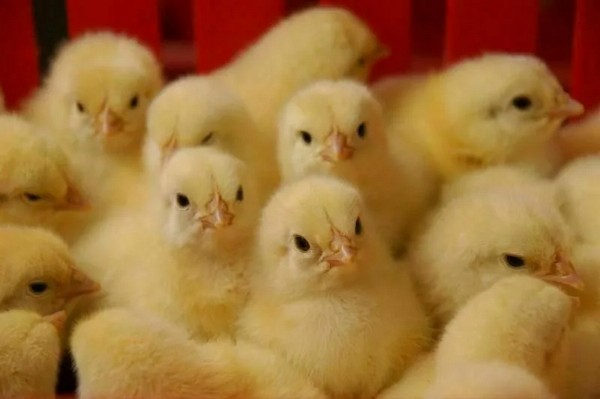
Similar experiments were later conducted by Lorenz with wild geese. The residents of the Austrian town of Altenberg, where these studies were conducted, were undoubtedly amused to see the scientist walking down the street at the head of a line of goslings. The birds followed him everywhere: on land and in the water when he swam in the pond, and later in the air when he rode a motorcycle.
An analysis of the following reaction in precocial bird chicks and other forms of imprinting showed that it is precisely imprinting in the brain that fixes the characteristics of an object toward which a certain species-specific, innate action is directed: the act of following a maternal figure (or, in the experiment, any moving object) is innate, but the appearance of this object or the sounds it makes are firmly fixed in memory through the process of imprinting without any additional reinforcement.
Imprinting manifests in different forms, and many scientists have studied and continue to study them. Interestingly, imprinting is only possible during a specific, short period after birth—neither earlier nor later. But once it has occurred, the result is exceptionally stable and, as a rule, cannot be undone.
Group Behavior and Hierarchy
Let’s touch upon another large and very important area of ethological research. We are talking about group behavior, the structure of intragroup relationships, and forms of animal communication.
Let’s turn to the wolf again. It is well known that wolves are pack animals that hunt their prey together. A lone wolf is not a very dangerous predator: a man armed with a sturdy club can handle it. In a pack, wolves show not only exceptional “courage” but also surprising cleverness, the ability to correctly assess a situation and accordingly coordinate their actions, using one “tactical maneuver” or another during the hunt.
How is the coordination of behavior among members of a wolf pack ensured? First of all, a strict order prevails in the pack. Most often, one of the males (the leader) and his female are at its head. The other members of the pack are at different levels of “subordination” to them and to each other. Animals (including the leader) must constantly defend their place on this so-called “hierarchical ladder,” but not through endless bloody fights and brawls, but primarily with the help of the “psychological influence” we are already familiar with—intimidation.
All expressive postures and body movements, as ethologists call them, as well as animal sound signals, are nothing but key stimuli. All members of a wolf pack constantly observe each other. Therefore, everything one wolf does is immediately noticed by the others, and each such action is instantly followed by a response. In short, in a wolf pack, there is continuous communication between animals, a constant “conversation” in the language of postures, movements, sounds, and smells. This is why the pack acts as a single whole. Each individual quickly reacts to all signals coming from another individual. For example, during a hunt, the sight of a wolf already catching a fleeing prey acts as a key stimulus on the other animals, making them immediately change their running direction and switch to that object of pursuit. This “mechanism” also works when wolves attack a conspecific who is losing a fight and is trying to escape.
Such a complex system of communication forms and intragroup relationships, as with wolves, is not found in all species of animals that live together. Even in their relatives, the African wild dogs, which also live and hunt in packs, there are no leaders or a clear system of subordination. Consequently, their means of communication are less diverse. On the other hand, in animals such as monkeys, the structure of the herd and forms of communication reach an even greater complexity than in wolves.
The Practical Importance of Ethology
Like other problems in ethology, the study of group behavior in animals is not only of great theoretical but also practical interest. This is especially true for domestic animals.
The productivity of farm animals depends not only on their proper feeding and the observance of other zootechnical standards. The animals’ “good mood,” so to speak, is also of great importance. And it noticeably worsens if, for example, the opportunities for full-fledged communication with their own kind are limited. It was noticed that if chickens’ wings are clipped, the overall physical condition and egg-laying capacity of these birds deteriorate. This is explained by the fact that the display of a spread-out wing plays the role of a signaling movement—one that impresses or frightens. Reducing the wing’s surface area diminishes this effect. It also turned out that the skillful selection of birds, taking into account these intragroup relationships, not only ensures a calm atmosphere in the poultry yard but also provides a noticeable economic effect.
Specialists in the behavior of farm animals have been able to show that in cows, there is a clear dependence between the animal’s position on the hierarchical ladder and the indicators of grazing efficiency (the number of feeding periods on the pasture and their duration, the duration of rest and rumination), and, accordingly, milk yield. And here, an excessive number of clashes, especially when they become fierce, noticeably reduces the animal’s productivity. This happens when large herds are formed without careful thought, disregarding the peculiarities of cows’ group behavior and their intragroup relationships. In Germany, scientists found that a good way to create balanced, calm herds is to form small, permanent groups of calves early on. Under conditions of their joint raising, the most favorable relationships are established between the animals.
The number of such examples, showing the significance of ethological research for the practice of animal husbandry—as well as for other sectors of the economy—could be multiplied.
Ethology Today: New Discoveries and Prospects
Ethology continues to develop actively, using the most modern technologies to study animal behavior in detail. For example, the use of GPS trackers, drones, and video surveillance with elements of artificial intelligence allows scientists to track the migration, social interactions, and communication of animals in their natural environment with unprecedented accuracy. Modern research is expanding our understanding of elementary thinking in animals like dolphins, elephants, and parrots, which demonstrate the ability to solve complex problems, use tools, and even show signs of empathy and compassion.
In ethology, the development of its core concepts is still ongoing, and not everything has been settled yet. As in any other science, different scientists hold different opinions on various issues, sometimes quite debatable. But without a clash of opinions and scientific debate, it is impossible to establish the truth. In any case, in its short existence, ethology has undoubtedly achieved considerable success, and there is every reason to expect even greater and more amazing achievements from it in the near future.