Why Do Objects Expand When Heated? The Science of Thermal Expansion Explained

The article is written by Pavlo Chaika, the chief editor of the "Piznavayka" magazine. Since its founding in 2013, Pavlo Chaika has been dedicated to popularizing science in the world. The main goal, both of the magazine and of this article, is to explain complex scientific topics in a simple and accessible language.
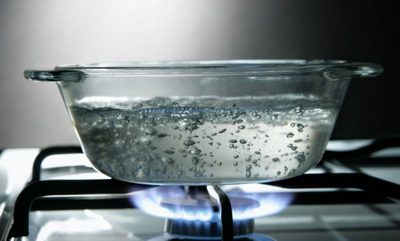
Every object, whether solid, liquid, or gas, is made up of tiny particles: atoms and molecules. These particles are in constant motion, even if that movement isn’t visible to the naked eye. When we heat an object, we give its particles additional energy.
This energy causes the atoms and molecules to move faster and vibrate more intensely. In solids, where particles are tightly bound in a crystal lattice, these vibrations become stronger, which increases the average distance between them. In liquids and gases, where particles are freer, their movement becomes more chaotic, and they begin to repel each other with greater force.
This increase in the distance between particles is what causes the object to expand in volume. This phenomenon is called thermal expansion.
How Does Thermal Expansion Manifest in Different States of Matter?
Solids
In solids, thermal expansion is the least noticeable but has immense importance. For example, this is why small gaps are left between sections of railway tracks. In the summer, when the temperature rises, the metal expands, and without these gaps, the tracks would deform.
Another example is bimetallic strips, which consist of two different metals with different coefficients of thermal expansion. When heated, one side expands more than the other, and the strip bends. This principle is used in thermostats that regulate the temperature in irons and kettles.
Liquids
Liquids generally expand much more when heated than solids. The best example is a regular thermometer. When it enters a warm environment, the liquid inside (mercury or alcohol) heats up, expands, and rises up the thin tube, indicating the temperature.
An interesting fact: water is an exception. At temperatures from 0 °C to 4 °C, it contracts instead of expanding. Only after 4 °C does it begin to expand like other liquids. This explains why ice always forms on the surface of bodies of water, not at the bottom.
Gases
Gases expand the most when heated. Their particles are at great distances from each other and are barely connected. When heated, their speed increases sharply, and they begin to occupy all the volume available to them. This is why the hot air in a hot air balloon expands, becomes less dense, and lifts the balloon upwards.
Thermal Expansion — Not Just a Theory
An understanding of this process is vitally important for engineers and builders. Bridges, skyscrapers, and pipelines are all designed with thermal expansion in mind. If this factor is not considered, the structures can be damaged.
For example, special expansion joints are used in bridges to allow them to expand and contract without damage. Similarly, when installing pipes, they are mounted with bends that absorb expansion and contraction.