Help Ukrainian army
Anyone who wants to help the heroic Ukrainian army in this difficult time, follow the link or click on the banner.

Anyone who wants to help the heroic Ukrainian army in this difficult time, follow the link or click on the banner.


Agile certification exams are designed to assess how practitioners reason, adapt, and make decisions in complex delivery environments. Unlike traditional knowledge-based tests, these exams emphasize applied judgment rather than memorization. For professionals preparing for the PMI Agile Certified Practitioner (PMI-ACP) exam, understanding this structural intent is critical to effective preparation.

The world of living nature is incredibly diverse, but all organisms can be broadly divided into two major groups based on how they get their food: autotrophs and heterotrophs. Understanding this classification is key to comprehending how ecosystems function and how energy moves from one organism to another.

Every object, whether solid, liquid, or gas, is made up of tiny particles: atoms and molecules. These particles are in constant motion, even if that movement isn’t visible to the naked eye. When we heat an object, we give its particles additional energy.

From the moment humans appeared on Earth, we had to constantly and carefully observe the behavior of the animals around us, and know their habits well. In fables and myths, the images of animal-people and animal-gods fantastically intertwined with a basic understanding of the actual behavior of certain animals, alongside specific human qualities. In this case, it is especially important to note that not only the “animal-like” creations of human imagination but also real, existing animals were endowed with human qualities. Their behavior was viewed through the lens of human motives and actions. This “humanizing” of animals, or anthropomorphism, as we call it today, played a significant role in the philosophical concepts of ancient thinkers who believed in the possibility of the soul migrating back and forth between humans and animals.

Extremely heavy and thin as hair, these astonishing strands of matter are known as cosmic strings. Scientists believe that in the history of the Universe, they played the role of “seeds” from which galaxies and their giant filamentary clusters grew. Who scattered these “seeds”? Have they survived to the present day, and is it worth looking for them in space? And, more generally, how much can we trust cosmological models? Are scientists mistaken in predicting such “oddities” in the cosmos?
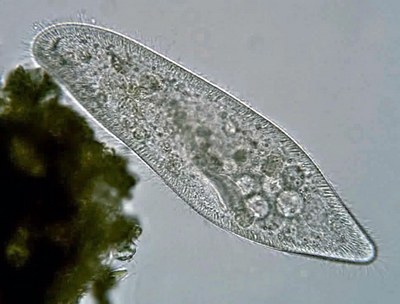
Life on our planet is characterized by an incredible variety of all kinds of living organisms, sometimes having an incredibly complex structure. All this diversity of life: from the simplest insects and plants to us, people (the most «complex organisms») consist of cells, these small bricks of living matter. If a human is the crown of biological evolution, then it will be very interesting to investigate its beginning: the simplest unicellular organisms which at the dawn of history became the founders of all life. The paramecium caudatum (along with amoeba) is one of the most famous simple unicellular creatures. What are the characteristics of the paramecium? What do paramecia eat? How do paramecia reproduce? Read on about all this below.

In today’s rapidly changing world, the importance of sustainable transportation cannot be overstated. As traffic congestion worsens and environmental concerns grow, many people are seeking alternative modes of commuting that are not only eco-friendly but also practical and efficient. One such option gaining popularity is three-wheel electric bikes, commonly known as trikes. In this article, we will explore the world of trike brands, their benefits, and why they offer a sustainable commute.

China’s influence in the global manufacturing landscape extends to the beauty and aesthetics industry, particularly in the production of slimming machines. These advanced devices have witnessed a surge in demand as people seek effective and non-invasive ways to achieve their desired body shape. In this article, we will explore the remarkable rise of China’s slimming machine industry, highlighting key factors that have contributed to its success.

The integration of nature into modern interior design has been a growing trend, driven by a desire for serene, naturalistic spaces. Artificial moss, supplied by adept faux plant suppliers, plays a crucial role in this movement, offering both eco-friendly and stylish solutions for contemporary designs.

The beauty industry has long been a space where functionality meets aesthetic appeal, especially in the realm of eye-shadow palettes. With the rising demand for sustainable practices, eco-friendly cosmetic packaging wholesale has become a significant focus for brands aiming to appeal to environmentally conscious consumers. This trend not only reflects a shift in consumer preferences but also represents a broader movement towards sustainability in beauty products.